
Enhancing Political Conversations with AI Tools
Politics, Communication, AI Tools
Why Better Political Conversations Matter More Than Ever
As a senior software engineer, I spend my days debugging systems. Lately, it feels like our political conversations need debugging even more than our code. With polarization rising, the way we talk to each other about politics can either fragment our communities or quietly strengthen them. The good news: like any skill, better conversations can be learned, practiced, and even assisted by tools such as The Conversation Coach™.
How Our Communication Habits Shape Political Discussions
In engineering, small habits—like writing tests or naming variables clearly—compound into reliable systems. Our communication habits work the same way. If we default to interrupting, assuming bad intent, or “winning” every debate, political conversations become zero-sum battles. Over time, friends avoid certain topics, families tiptoe around elections, and communities lose the ability to solve problems together.
Conversely, habits like asking clarifying questions, summarizing what we heard, and acknowledging valid points create a different dynamic. They signal, “We’re on the same team, even if we disagree on the solution.” That shift—from combat to collaboration—is where constructive political dialogue begins.
Respectful, Productive Conversations Beat “Winning” Every Time
In code reviews, the goal is not to prove you’re the smartest person in the room; it’s to ship better software. Political conversations work best with the same mindset: optimize for understanding, not victory. Respectful, productive conversations:
Preserve relationships even when you disagree deeply.
Surface shared values (safety, fairness, opportunity) beneath policy differences.
Make it psychologically safe for people to reconsider or refine their views.
Respect is not about being vague or avoiding hard topics; it’s about treating the person across from you as more important than “being right.” That’s the foundation of any productive exchange—political or otherwise.
Common Communication Mistakes (That Feel Like Bugs in Our Dialogue)
When I review logs, I look for recurring errors. In conversations, I see the same recurring “bugs”:
Straw-manning: Attacking an oversimplified version of someone’s view instead of what they actually said.
Mind-reading: Assuming you know their motives (“You just want…”) instead of asking.
Whataboutism: Dodging a point by instantly jumping to another issue or “the other side.”
Always-on broadcast mode: Treating the conversation like a monologue, not a dialogue.
These mistakes escalate tension and shut down curiosity. The fix isn’t to talk less about politics, but to talk differently about it.
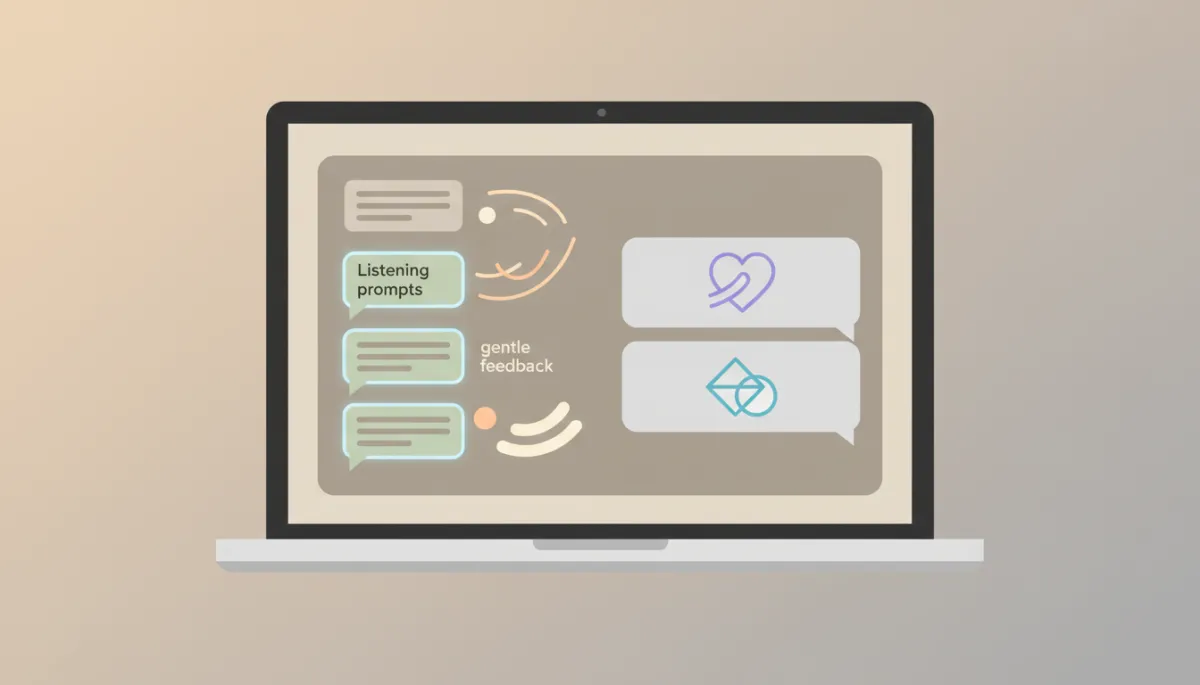
Gentle feedback on tone and wording can turn arguments into real dialogue.
Active Listening: The Core Skill We Keep Under-Engineering
Active listening is the conversational equivalent of logging and monitoring: you gather enough signal before you act. It looks like:
Letting the other person finish without planning your rebuttal mid-sentence.
Paraphrasing: “So you’re worried that… Did I get that right?”
Asking, “What led you to that view?” instead of “How can you believe that?”
When people feel heard, they stop defending as hard and start exploring more. That’s when nuance appears—and nuance is where real understanding lives.
Reflect Before You React: Adding a “Delay()” to Your Emotions
Most regrettable political comments are sent in “production” without a test run. One simple habit is to insert a brief pause between what you feel and what you say. As developers, we already do this with dangerous operations—we double-check before running a destructive script. We can do the same with our words.
Here’s a playful pseudo-code pattern I use mentally when a topic hits a nerve:
function handlePoliticalComment(comment) {
    const emotionalSpike = detectEmotionalSpike(comment);

    if (emotionalSpike > 0.7) {
        wait(3000); // 3 second pause before responding
        const reflection = generateReflectionQuestions(comment);

        return askClarifyingQuestion(reflection);
    }

    return respondThoughtfully(comment);
}
Obviously this code won’t run on your brain, but the pattern is real: pause, reflect, then respond. Even a few seconds of reflection can turn a reactive jab into a thoughtful question.
AI as a Neutral Conversation Coach (Not a Judge)
One advantage AI has in heated conversations is simple: it doesn’t get offended. Tools like The Conversation Coach™ can act as a neutral layer between your impulse and your message, helping you rephrase, soften, or clarify before you hit send—without taking sides on the politics themselves.
Imagine drafting a message and running it through a small helper function:
async function coachMessage(rawText) {
    const analysis = await conversationCoach.analyze(rawText);

    if (analysis.tone === "escalating") {
        return conversationCoach.suggestRephrase(rawText, {
            goal: "curious",
            keepCorePoint: true
        });
    }

    return rawText;
}
Under the hood, The Conversation Coach™ can highlight loaded phrases, flag assumptions, and suggest questions that invite dialogue rather than shutdown. It doesn’t tell you what to believe; it helps you express your views in a way that another human can actually hear.
Better Conversations, Stronger Communities
When political talk breaks down, people disengage—from neighbors, from local issues, from voting, from volunteering. But when we practice healthier communication habits, something different happens: people stay at the table. They’re willing to collaborate on school boards, community projects, or workplace policies even when they disagree on national headlines. That’s how stronger communities are built: not by perfect agreement, but by resilient relationships.
Using Tools Like The Conversation Coach™ to Upgrade Your Dialogue
As individuals, we can’t single-handedly rewrite the political landscape, but we can absolutely refactor our own communication. That’s where tools like The Conversation Coach™ come in. Think of it as a linter for your language and tone: it helps you catch “bugs” in your message before they hit someone else’s screen.
Draft a political text or post, then let the AI highlight potential triggers.
Ask it for alternative phrasings that keep your conviction but add respect and curiosity.
Use its prompts to practice active listening and reflecting before reacting.
Over time, you internalize these patterns. You won’t need to open an app for every conversation, because you’ll have built better conversational “muscle memory.”
A Personal Call to Action
We can’t debug democracy alone, but we can each take responsibility for our own function calls into the system: the conversations we have with friends, family, and colleagues. If you’ve ever walked away from a political talk thinking, “There has to be a better way to do this,” you’re right—and it starts with small, intentional changes in how we speak and listen.
Consider experimenting with a neutral AI coach like The Conversation Coach™ for your next difficult dialogue. Use it to practice active listening, reflection, and more respectful phrasing. Better political conversations aren’t a nice-to-have; they’re infrastructure for a healthier, more resilient community—and each of us can help build it, one conversation at a time.
